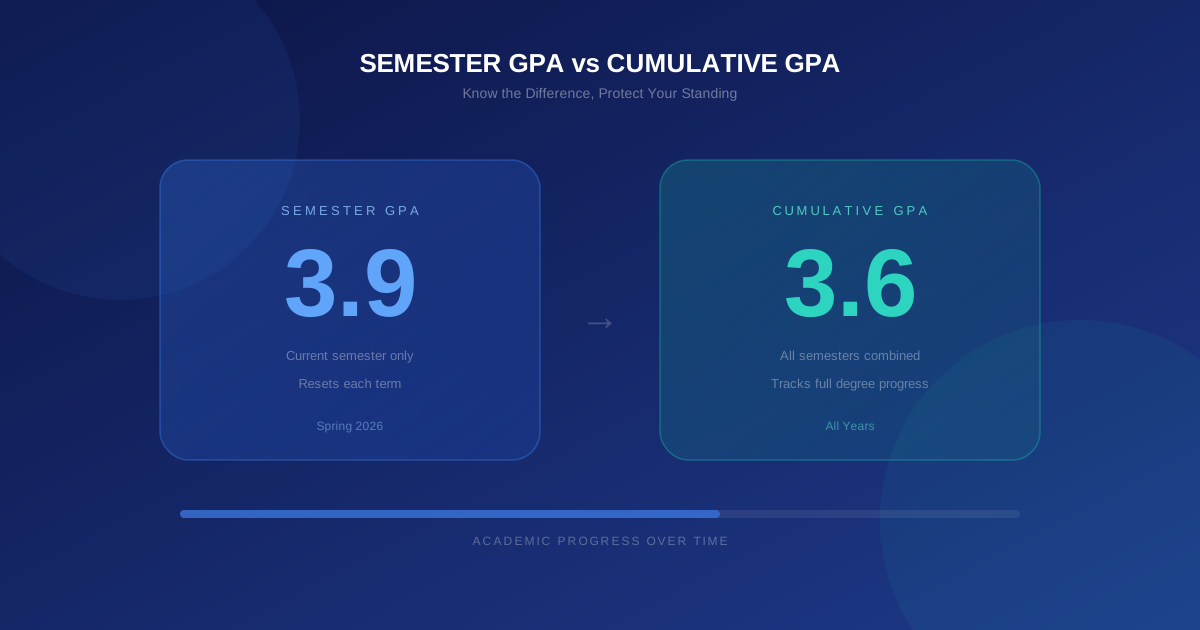
You pull off a stellar 3.8 GPA this term, only to look at your cumulative GPA and find it barely nudged from a 3.1. The mismatch is incredibly frustrating and leaves you feeling like your hard work doesn't count, especially when academic standing or job applications are on the line. Don't worry. This happens because of mathematical inertia, and understanding how semester and cumulative GPAs differ helps you set realistic milestones to recover your standing.
Semester GPA vs. Cumulative GPA: At a Glance
The difference between these two metrics comes down to the timeframe and the pool of credits they measure:
- Semester GPA (or Term GPA) is a snapshot of your performance over a single grading term (like Fall or Spring).
- Cumulative GPA represents the credit-weighted average of every grade you have earned throughout your entire career at your current institution.
To understand the core math that powers both, read our guide on How to Calculate Your GPA Step by Step.
Use the tool below to convert your GPA averages to percentages:
Why You Can’t Average Your Semester GPAs
A common math error is adding your semester GPAs together and dividing by the number of semesters. This simple average breaks down because semester credit loads vary, as detailed in College Board's GPA Standards.
For example, if you earned:
- Semester 1 (12 credits): 3.50 GPA (42.0 Quality Points)
- Semester 2 (18 credits): 3.80 GPA (68.4 Quality Points)
A simple average would suggest a combined GPA of 3.65.
However, Semester 2 carries more weight because you took more courses. The correct cumulative GPA calculation is:
- (42.0 + 68.4) Quality Points ÷ (12 + 18) Credits = 3.68 GPA
Always calculate cumulative GPA using the total quality points divided by total credits across all terms. Learn more about weights in our guide on Weighted Average Marks.
The Trench Truth — The Probation Marathon: The harsh reality of GPA recovery is mathematical inertia. If you have accumulated 90 credits with a 2.0 GPA, pulling off a perfect 4.0 semester (15 credits) will only bump your cumulative GPA to a 2.28. Stop staring at the final mountain and focus on the milestone. If you are on academic probation, your immediate goal isn't a 3.5 cumulative GPA by next semester — that is mathematically impossible. Your goal is simply to hit a 2.5 semester GPA to clear the probation threshold. Treat cumulative GPA recovery as a multi-semester marathon, not a sprint.
The Resume Spin: Strategic Brackets
When you are applying for internships or jobs with a lower cumulative GPA, you do not have to let freshman-year mistakes sink your applications.
Many hiring managers understand that students take time to adjust. Universities like the University of Arizona outline distinct calculations for "Major GPA" vs "Cumulative GPA" on official transcripts, and guidelines from the National Association for College Admission Counseling (NACAC) highlight how GPA trends show student maturity.
Use Strategic Brackets on your resume to showcase your growth:
- Major GPA: 3.6 / 4.0
- In-Major GPA: 3.5 (Last 60 credits)
- Dean's List: Fall 2025 & Spring 2026
This formatting tells employers: "I messed up my general education classes as a freshman, but once I focused on my actual field, I crushed it."
For converting your GPA scores to standard grades, check out our guide on how to calculate Grade Percentage.
Frequently Asked Questions
Calculate Your Standing Instantly
If you need to convert your cumulative GPA or individual semester scores to standard percentages, use our GPA to Percentage Calculator. For CBSE students, we recommend our specialized CGPA to Percentage Calculator. If you are budgeting your attendance to avoid grade cuts, use our Attendance Planner.
Discussion
Loading comments...